The bomber the mountain kept: Wellington MF509
The day
Elevation
Distance and ascent are computed from the published GPX track (ascent from its terrain-model elevations, at a 3 m smoothing threshold), not rounded from guidebooks. The plan view and the profile are drawn from that same track: they show the shape of the day, not a navigable map.
The route in 47 seconds
The story

High on Carreg Goch there's a scatter of aluminium the maps don't mark, under a Canadian flag that somebody keeps flying. It's what's left of Wellington MF509, which flew into the hillside on the night of the 20th of November 1944.
The crew were on a training flight out of RAF Wellesbourne Mountford with 22 Operational Training Unit. Climbing to get over the hills, ice built up on the wings. The starboard engine was already giving trouble, and the other engine couldn't hold the aircraft up on its own. All six of the crew died. They were a Royal Canadian Air Force crew, and the youngest was only about twenty.
For decades afterwards their families had very little information about how and when they died. Then a photograph of an unidentified airman, recovered from the wreckage by a local man, was posted online by his granddaughter in 2005. She found the McGill University "McGill Remembers" archive in Montreal, which listed crew member William Allison among the university's war casualties, and the connection was made. Allison's sister Phyllis planned to visit the crash site but was unable to travel; a ceremony was held on her behalf and her inscribed plaque was placed on the memorial alongside the larger one that lists the names of the dead. With the poppy wreaths and the Canadian flag moving in the wind, it is impossible not to be moved by the place. The film tells it properly.
Leave the site as it is. It's a memorial, not a souvenir stall. Every piece that walks off the hill is a piece of the story gone.
The walking
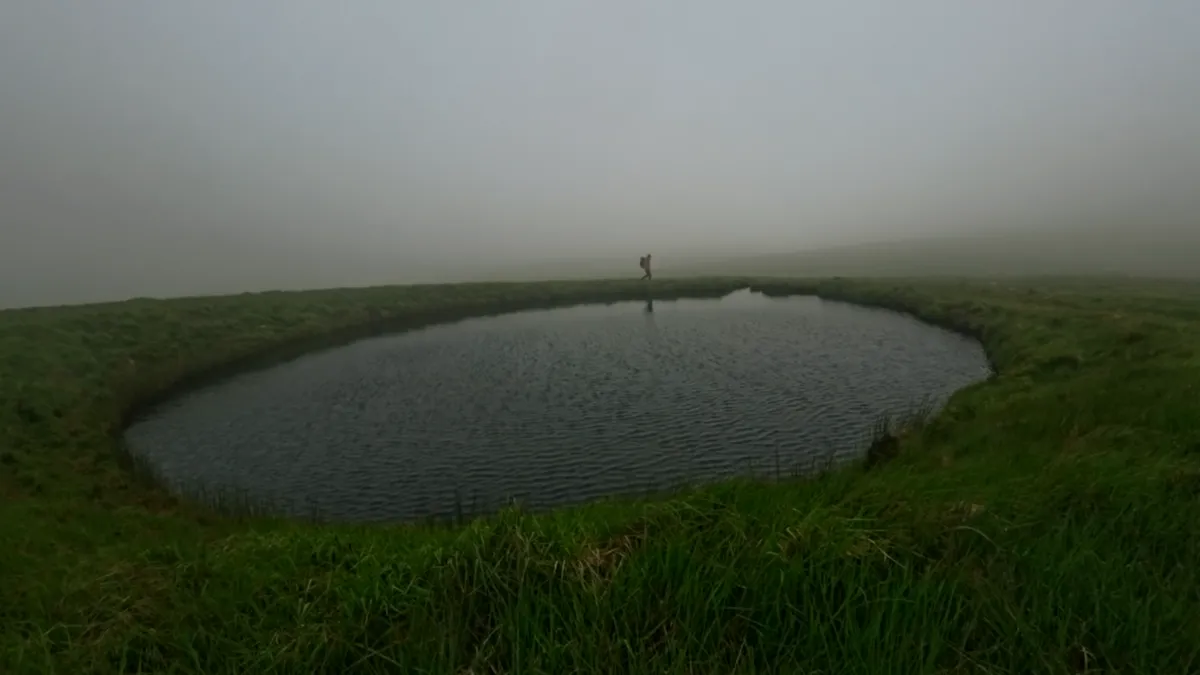
The circuit starts from the National Showcaves (Dan-yr-Ogof) car park and climbs onto Carreg Goch. Most of the day's work is in that first pull, and once you hit the ridge line everything relaxes. This is limestone country, and the ground says so: the moor is pocked with shakeholes, the craters left where the surface has slumped into whatever's underneath. Give them space and stay out of them, because you never know whether there's a cavern under the floor. Later the route passes a swallow hole where you can watch a river flow towards the cave mouth and simply vanish underground.
That same geology is why the water cell above says sparse. Up on the limestone, rain doesn't run off in streams, it goes down. The final third of the circuit follows a river, so there's reliable water late in the walk, but if your camp sits up on the plateau, carry what you need for the night.
The camp
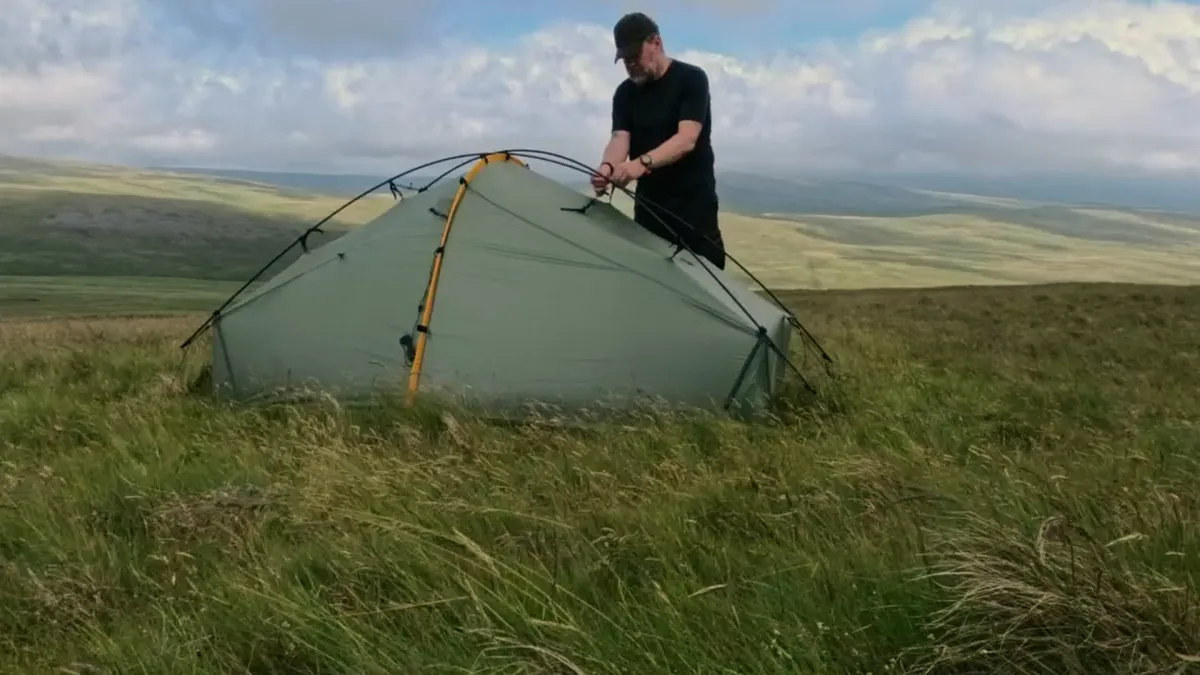
The night out is in the film, though you'll notice the talking stops. Some parts of a wild camp are better left quiet. Dinner was chorizo and halloumi hash with potatoes, flatbread and parmesan, which beats a boil-in-the-bag by a distance and weighs less than you'd think. Cook it in the film's company and judge for yourself, or follow the recipe.
Practical notes
The walk starts by the National Showcaves (SN 842 163), but be aware the showcaves car park needs prior permission and a fee. There are laybys on the road nearby that do the job. Navigation on the plateau is honest map-and-compass ground in mist, because the shakehole field all looks the same. The usual wild-camping courtesies apply: pitch late, strike early, leave nothing. Where a night like this sits with the law, and how the quiet convention works, is in the law guide.
Filmed for the Jim's Wild Trails channel. If you walk it, tell me what I missed. Corrections welcome: social@jimswildtrails.online.
Also on this site: Bronze Age cairns and wild camp on the Black Mountain west and Llanthony Priory and the border ridge above the Vale of Ewyas. Planning your own night out? Start with how I stay safe on an overnighter, the kit I carried, and the rest of the guides.