Camping without leaving a mark
The measure of a good wild camp is simple: the next person to walk that way should have no idea it happened. Not a flattened ring of grass, not a scorch mark, not a tea bag under a stone. Partly that is just manners towards a hill that was there long before me. But in Wales and England it is more than manners. As I set out on the law page, camping here mostly survives on tolerance, and tolerance is a bank account: every clean, invisible camp pays in, and every fire ring and abandoned tent makes a withdrawal on behalf of all of us.
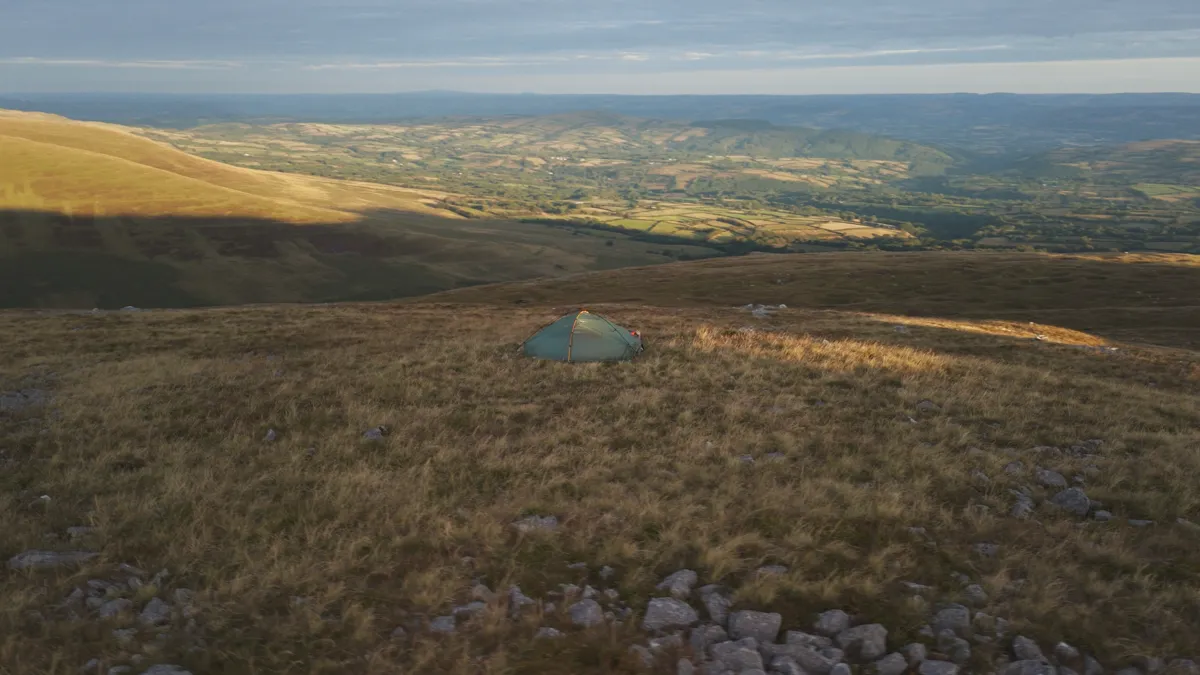
The pitch
I camp high and remote, away from paths, houses and enclosed farmland, on ground that will shrug off a tent: short grass, dry and durable, nothing rare or fragile underneath. The tent goes up late in the evening, comes down early the next morning, and I am walking again by the time most people are at breakfast. One night, then move on. Settling in for a weekend on one patch is a different activity, and it is not this one.
No fires
No fires, full stop. A stove does everything a campfire does that I actually need, boils water faster, and leaves no scar. What a fire leaves is a burnt circle that lasts for years, and on peat and dry moorland the risk is far worse than a mark: fire can get into the ground itself and smoulder for days, and whole hillsides in the UK have been lost that way. However romantic the idea, the hill pays for it. The stove stays, the fire stays home.
Everything comes home
Everything I carry in, I carry out, and "biodegradable" buys nothing an exemption. An orange peel or a banana skin will outlast your interest in it by months, and a tea bag longer still. Food scraps come home too: tipping them into the grass feeds nothing but rats and bad habits. The last thing I do before shouldering the pack is a slow walk round the pitch, looking for the tent peg, the wrapper corner, the anything, because the ground has a talent for keeping souvenirs.
The unavoidable subject
Toileting gets one paragraph, because it needs one and most guides pretend it doesn't. Well away from any water course, well away from paths and anywhere someone might pitch, dealt with properly below ground, and paper carried out in a sealed bag rather than buried or, worse, burned. Sixty seconds of minor indignity, and the hill stays clean.
Wildlife and the seasons
From March to the end of July the moors and uplands are a nursery: ground-nesting birds sit tight and invisible until you are almost on top of them. In those months I am more careful where I walk off-path and where I pitch, and if a bird gets loud and agitated nearby, I am too close to a nest and I move. Livestock get the same courtesy at a distance, and where stock graze, dogs belong on leads. None of this costs a thing beyond attention.
Keeping quiet spots quiet
You will never find the location of one of my camps on this site or in the films, and that is deliberate. A quiet spot is quiet because almost nobody goes there, and nothing kills one faster than appearing in a video with a pin on a map. The spot gets loved to death, the landowner gets a mess, and the tolerance that lets all of us camp gets a little thinner. I show you the hills and the routes; the pitches stay between me and the hill.
The short version
None of this is hardship or purity. It is just leaving the hill exactly as you would want to find it, and it is the whole price of admission for camping the way I do. The official guidance is the Countryside Code in England and Wales and the Scottish Outdoor Access Code north of the border; both are short, sensible reads.
Personal practice, not instruction. None of the guides are sponsored and none carry affiliate links.